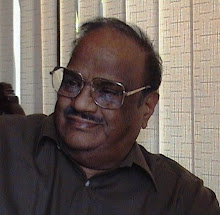
Rajiv Gandhi was killed in a bomb blast at an election rally in Sriperumpudur, Tamil Nadu on May 21, 1991. As the principal scientific investigator, I had detected that the blast was from a human bomb, the first one of its kind.
On May 1, 1993 another human bomb was exploded in Colombo killing Sri Lankan President Ranasinghe Premadasa who was directing a May Day rally. Eighteen months later, Sri Lankan opposition leader and presidential candidate, Gamini Dissanayake was slain in Colombo by a human bomb on October 23, 1994. Mrs. Srima Dissanayake, widow of the slain leader wrote to the Prime Minister Ms Chandrika Kumaratunga and suggested that my services, along with that of the senior police officer who headed the team which investigated the Rajiv Gandhi Assassination case, be requested from the Indian Government to assist the Sri Lankan police in their investigation into the killing of her husband.
At that point of time, having retired from government service, I was attached to the University of Madras as Emeritus Fellow in Forensic Sciences and I offered my services readily. My counterparts in Sri Lanka, had some initial discussions with me on telephone and were waiting for my arrival.
But the Government of India chose to send men of their own choice. Their visit to Colombo turned out to be a pleasure trip as the Sri Lankan police had nothing to learn from them. I was told this when I visited Colombo later on the invitation of the Medico Legal Society of Sri Lanka to deliver the Annual Oration and to receive the gold medal.
This was an honour first time bestowed to an expert who hails from countries other than UK and the continent of course the topic of the oration was ‘Forensic Aspects of Rajiv Gandhi Assassination’ and the audience was a combination of police officers, judicial officers and medical officers.
Since the very first one, terrorist groups have deployed a number of human bombs which have become a familiar feature of contemporary warfare and insurgency in countries like Iraq, Israel, Afghanisthan, Chechnya and Sri Lanka. Yet I did not bring out an authentic publication on the forensic aspects of the human bomb, even though on occasions I had made oral presentations on the subject to academics like the one mentioned above. Indeed I owe an explanation to all inquisitive minds and in particular to my forensic fraternity the world over for bringing out this book now after such an inordinate delay.
On May 1, 1993 another human bomb was exploded in Colombo killing Sri Lankan President Ranasinghe Premadasa who was directing a May Day rally. Eighteen months later, Sri Lankan opposition leader and presidential candidate, Gamini Dissanayake was slain in Colombo by a human bomb on October 23, 1994. Mrs. Srima Dissanayake, widow of the slain leader wrote to the Prime Minister Ms Chandrika Kumaratunga and suggested that my services, along with that of the senior police officer who headed the team which investigated the Rajiv Gandhi Assassination case, be requested from the Indian Government to assist the Sri Lankan police in their investigation into the killing of her husband.
At that point of time, having retired from government service, I was attached to the University of Madras as Emeritus Fellow in Forensic Sciences and I offered my services readily. My counterparts in Sri Lanka, had some initial discussions with me on telephone and were waiting for my arrival.
But the Government of India chose to send men of their own choice. Their visit to Colombo turned out to be a pleasure trip as the Sri Lankan police had nothing to learn from them. I was told this when I visited Colombo later on the invitation of the Medico Legal Society of Sri Lanka to deliver the Annual Oration and to receive the gold medal.
This was an honour first time bestowed to an expert who hails from countries other than UK and the continent of course the topic of the oration was ‘Forensic Aspects of Rajiv Gandhi Assassination’ and the audience was a combination of police officers, judicial officers and medical officers.
Since the very first one, terrorist groups have deployed a number of human bombs which have become a familiar feature of contemporary warfare and insurgency in countries like Iraq, Israel, Afghanisthan, Chechnya and Sri Lanka. Yet I did not bring out an authentic publication on the forensic aspects of the human bomb, even though on occasions I had made oral presentations on the subject to academics like the one mentioned above. Indeed I owe an explanation to all inquisitive minds and in particular to my forensic fraternity the world over for bringing out this book now after such an inordinate delay.
Why a Book titled 'The First Human Bomb" comes out almost after 17 solid years?
The Case was first handled by the Tamil Nadu State Police which had given me full freedom to examine the scene of crime and to handle the fourth estate. But the moment the Central Bureau of Investigation [CBI] took over the case for investigation, my liberty to speak to the media was snuffed out. Even my desire to publish a research paper on the forensic aspects of the case was curtailed by the stand taken by the Special Investigation Team [SIT] of the CBI that no publication should come out until the case was over.
The SIT filed the charge sheet before the Designated Court [special court] on May 20, 1992. The proceedings of the Designated Court were held in camera and the court passed an order on the plea of the SIT that none of the court proceedings should be published. The court also passed orders declaring certain witnesses as coded ones. It did not allow even the names and addresses of the coded witnesses to be published. I was also cited as a coded witness even though I did not come under the category of political witnesses with a threat perspective, where there is justification in keeping their deposition in the court as secret. I was the principal scientific investigator for the case and already known to the world as such, since I was the only source of authentic information to the press from day one. I do not know why then the SIT had placed me in the category of a coded witness! The security aspect could surely have not been their concern, because no security was provided for me, say in comparison to the security arrangements for themselves which were of a superlative degree. One Senior Correspondent of a National Newspaper remarked that if forensic evidence was tendered in an open court, it may steal the show overshadowing all other aspects of investigation. Whatever might have been the intention, I was sorry that the media and the public were deprived of knowing the entire scientific marvel that had gone into the case.
The Assassination Case then became a prolonged affair and my urge to write a book on the forensic aspects of case slowly diminished. Meanwhile I moved from the Forensic Department to Anna University as faculty in Forensic Engineering for a year and immediately thereafter joined the Madras University as Emeritus Fellow, a two years’ assignment of the University Grants commission. After this I was invited by the National Law School of India University, Bangalore to join as Professor of Forensic Sciences. After a five years stint there I was invited to join the National Law University, Jodhpur as Director-Professor of the School of Science and Forensic Sciences. Later I became Pro Vice-Chancellor of the same Law University. There was little time to renew my interest in bringing out a publication on the forensic aspects of this case. I know that I am accused of lethargy; comparing that in the likewise case of John F. Kennedy’s assassination more than forty research publications have come out. All the clue materials and the forensic reports connected with the Rajiv Gandhi assassination case are gathering dust in the precincts of the court thanks to the secretive procedure adopted; preventing the possibility of any research communication from anyone other than myself. I also felt that it will be doing a disservice to the forensic fraternity if I allow my entire research work on forensic aspects of the case to go into oblivion. It is in the spirit of better late than never, the book is before you now.
The purpose and plan of this book is to furnish the details of sophistication and expertise that went into the first human bomb set off to kill Rajiv Gandhi and to bring out the whole gamut of techniques and skills that went into the forensic analysis and crime scene reconstruction. While I narrate my findings during the first few frenetic days as a day-by-day account, related scientific information is also interwoven.
A section of the book focuses on the forensic techniques used in identifying the assassin and her associates from their skulls, head models and photographic evidence. Particular attention is paid to the definitions and characteristics of explosives that play a key role in terrorists’ activities. The book includes almost all the text, photographs and illustrations that formed part of the original 167 paged report I had prepared for the case. The entire contents of the book are based only on my own virgin case notes and have not hitherto been used or exploited by any other source in publications about Rajiv Gandhi. I hope the book will be an additional source of information for investigators and the forensic community, besides offering an interesting read for the general book- lover.
The Case was first handled by the Tamil Nadu State Police which had given me full freedom to examine the scene of crime and to handle the fourth estate. But the moment the Central Bureau of Investigation [CBI] took over the case for investigation, my liberty to speak to the media was snuffed out. Even my desire to publish a research paper on the forensic aspects of the case was curtailed by the stand taken by the Special Investigation Team [SIT] of the CBI that no publication should come out until the case was over.
The SIT filed the charge sheet before the Designated Court [special court] on May 20, 1992. The proceedings of the Designated Court were held in camera and the court passed an order on the plea of the SIT that none of the court proceedings should be published. The court also passed orders declaring certain witnesses as coded ones. It did not allow even the names and addresses of the coded witnesses to be published. I was also cited as a coded witness even though I did not come under the category of political witnesses with a threat perspective, where there is justification in keeping their deposition in the court as secret. I was the principal scientific investigator for the case and already known to the world as such, since I was the only source of authentic information to the press from day one. I do not know why then the SIT had placed me in the category of a coded witness! The security aspect could surely have not been their concern, because no security was provided for me, say in comparison to the security arrangements for themselves which were of a superlative degree. One Senior Correspondent of a National Newspaper remarked that if forensic evidence was tendered in an open court, it may steal the show overshadowing all other aspects of investigation. Whatever might have been the intention, I was sorry that the media and the public were deprived of knowing the entire scientific marvel that had gone into the case.
The Assassination Case then became a prolonged affair and my urge to write a book on the forensic aspects of case slowly diminished. Meanwhile I moved from the Forensic Department to Anna University as faculty in Forensic Engineering for a year and immediately thereafter joined the Madras University as Emeritus Fellow, a two years’ assignment of the University Grants commission. After this I was invited by the National Law School of India University, Bangalore to join as Professor of Forensic Sciences. After a five years stint there I was invited to join the National Law University, Jodhpur as Director-Professor of the School of Science and Forensic Sciences. Later I became Pro Vice-Chancellor of the same Law University. There was little time to renew my interest in bringing out a publication on the forensic aspects of this case. I know that I am accused of lethargy; comparing that in the likewise case of John F. Kennedy’s assassination more than forty research publications have come out. All the clue materials and the forensic reports connected with the Rajiv Gandhi assassination case are gathering dust in the precincts of the court thanks to the secretive procedure adopted; preventing the possibility of any research communication from anyone other than myself. I also felt that it will be doing a disservice to the forensic fraternity if I allow my entire research work on forensic aspects of the case to go into oblivion. It is in the spirit of better late than never, the book is before you now.
The purpose and plan of this book is to furnish the details of sophistication and expertise that went into the first human bomb set off to kill Rajiv Gandhi and to bring out the whole gamut of techniques and skills that went into the forensic analysis and crime scene reconstruction. While I narrate my findings during the first few frenetic days as a day-by-day account, related scientific information is also interwoven.
A section of the book focuses on the forensic techniques used in identifying the assassin and her associates from their skulls, head models and photographic evidence. Particular attention is paid to the definitions and characteristics of explosives that play a key role in terrorists’ activities. The book includes almost all the text, photographs and illustrations that formed part of the original 167 paged report I had prepared for the case. The entire contents of the book are based only on my own virgin case notes and have not hitherto been used or exploited by any other source in publications about Rajiv Gandhi. I hope the book will be an additional source of information for investigators and the forensic community, besides offering an interesting read for the general book- lover.
Publishers: ALT Publications, High Court Road Hyderabad. e-mail : aaltp@yahoo.com